
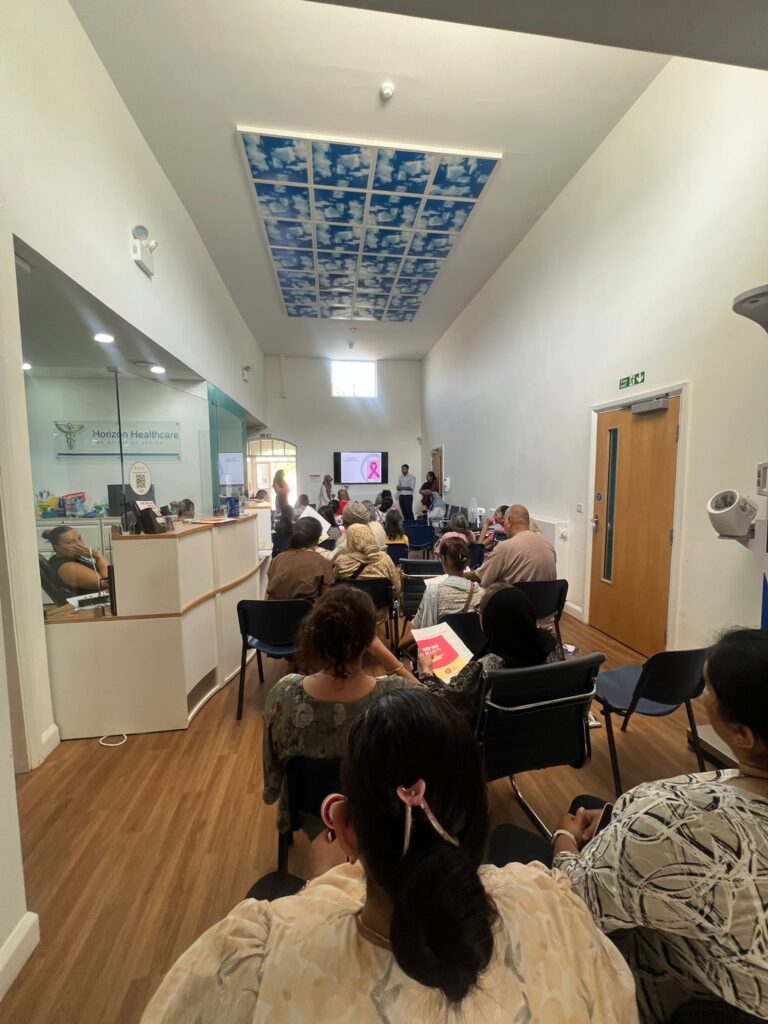
Horizon Healthcare recently welcomed patients to a successful Breast Screening Awareness Workshop, led by two of our doctors, with a fantastic turnout from our community.
The session was designed to increase awareness of breast health, encourage regular self checking and give patients the confidence to recognise changes and seek medical advice when needed. Throughout the workshop, patients actively participated in discussions, asked thoughtful questions and shared their experiences, creating an open and supportive learning environment.
One of the greatest strengths of the session was its accessibility.
We know that health information is most effective when people can understand it in a language they are comfortable with. During the workshop, parts of the presentation were translated as the doctors spoke, helping everyone feel included and confident to take part.
Patients also received breast awareness leaflets in English, Hindi, Gujarati, Punjabi, Urdu and Bangla, ensuring they could take the information home, share it with family members and refer back to it whenever needed.
The feedback from patients was extremely positive. Many commented that the information was easy to understand, that they felt more confident about checking their breasts and recognising changes, and several asked if we could run similar educational sessions in the future.
Key Breast Awareness Messages
The workshop reinforced a number of important breast health messages, including:
- Get to know what is normal for your breasts by checking them regularly.
- There is no single correct way to check your breasts. The important thing is becoming familiar with how they normally look and feel.
- Be aware of any new or unusual changes, including:
- A lump or swelling in the breast, upper chest or armpit.
- Changes in breast size or shape.
- Skin changes such as puckering or dimpling.
- A nipple becoming inverted or changing in appearance.
- Rash or crusting around the nipple.
- Unusual discharge from either nipple.
- Redness or inflammation of the breast.
- Persistent pain in the breast or armpit.
While most breast changes are not cancer, early assessment is important. The earlier breast cancer is detected, the more successful treatment is likely to be.
We would like to thank everyone who attended and helped make the session such a success. We look forward to hosting more patient education events in the future as we continue supporting our community through prevention, education and accessible healthcare.
Recent Comments